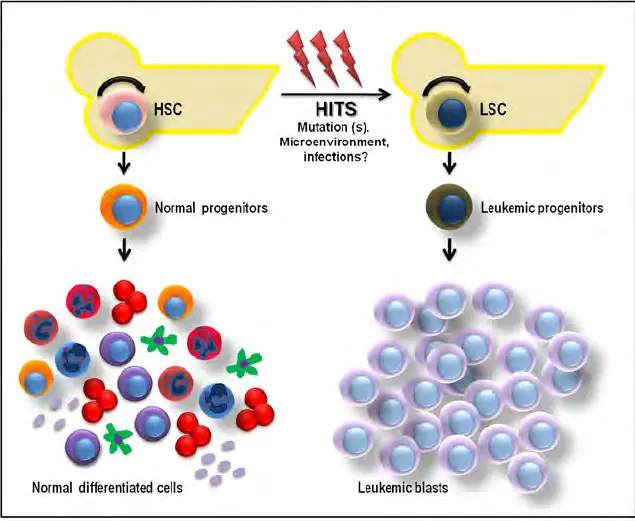
The Leukemic Stem Cell (LSC) represents a rare subpopulation of malignant cells within leukemia that possesses the ability to self-renew, differentiate, and sustain disease progression. Unlike bulk leukemic cells, which have limited proliferative capacity, LSCs exhibit stem cell–like properties similar to normal hematopoietic stem cells (HSCs), enabling them to resist conventional chemotherapy and drive relapse. These cells are characterized by specific surface markers such as CD34⁺CD38⁻ in acute myeloid leukemia (AML) and distinct molecular signatures involving dysregulated pathways like Wnt/β-catenin, Notch, Hedgehog, and PI3K/AKT/mTOR. LSCs maintain a quiescent state within the bone marrow niche, which provides a protective microenvironment against therapeutic stress. Understanding the biology of leukemic stem cells is crucial for the development of targeted therapies aimed at eradicating the root of leukemia, preventing minimal residual disease, and achieving long-term remission.